



Accessible Lift Platforms
OHC Lift accessible lift platforms provide a practical vertical-access solution for wheelchair users and people with reduced mobility at building entrances, landings and other locations where a conventional passenger lift is not suitable. The system is designed for straightforward operation, reliable movement and integration with the architectural conditions of the site.
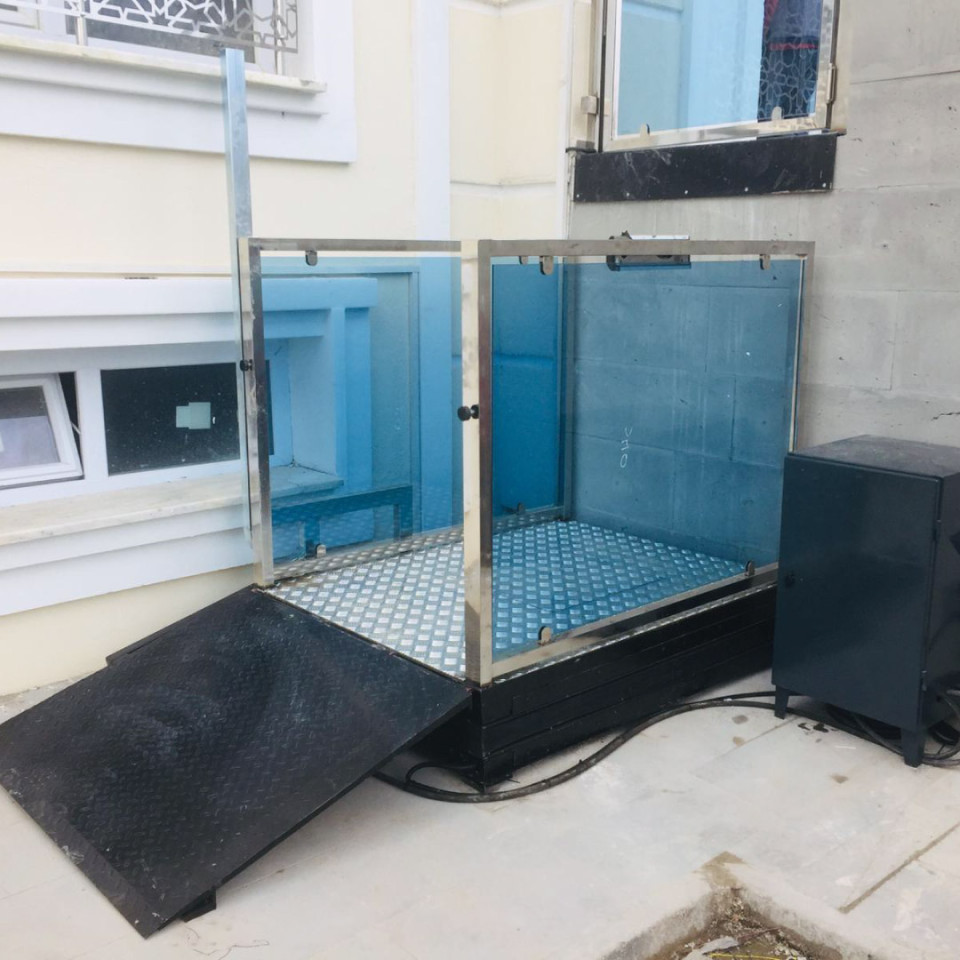
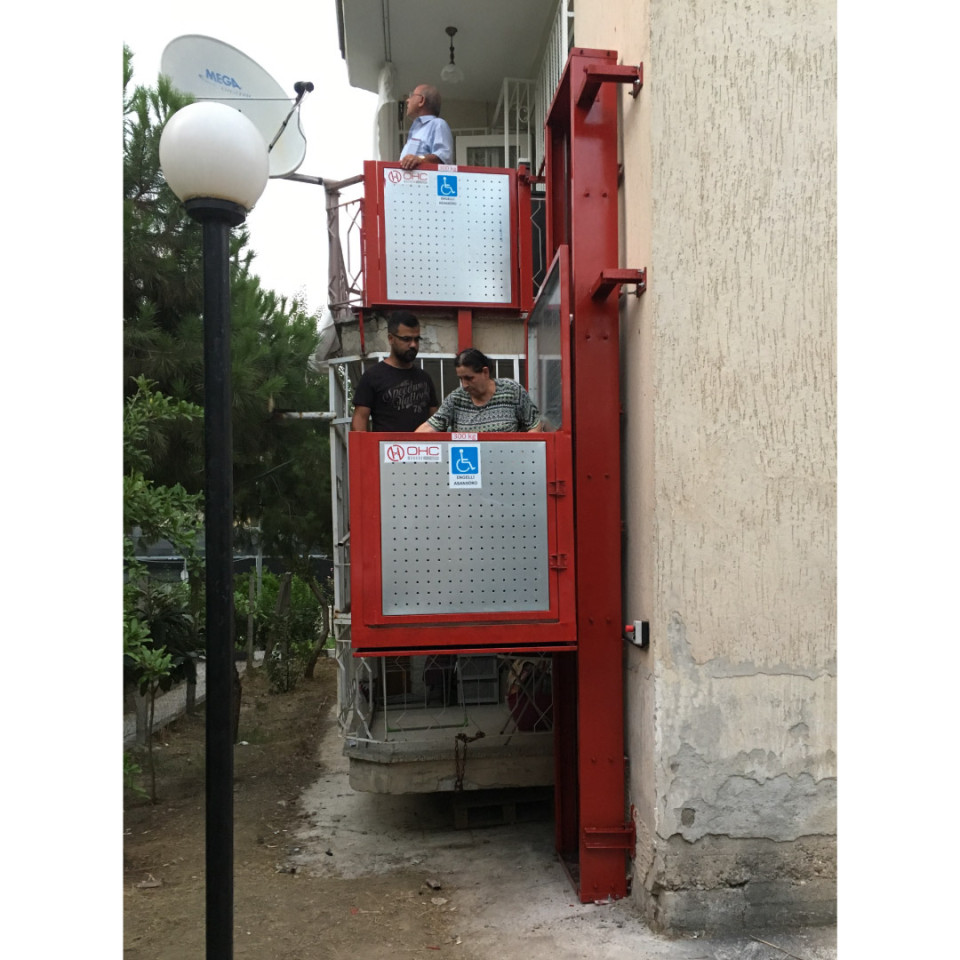
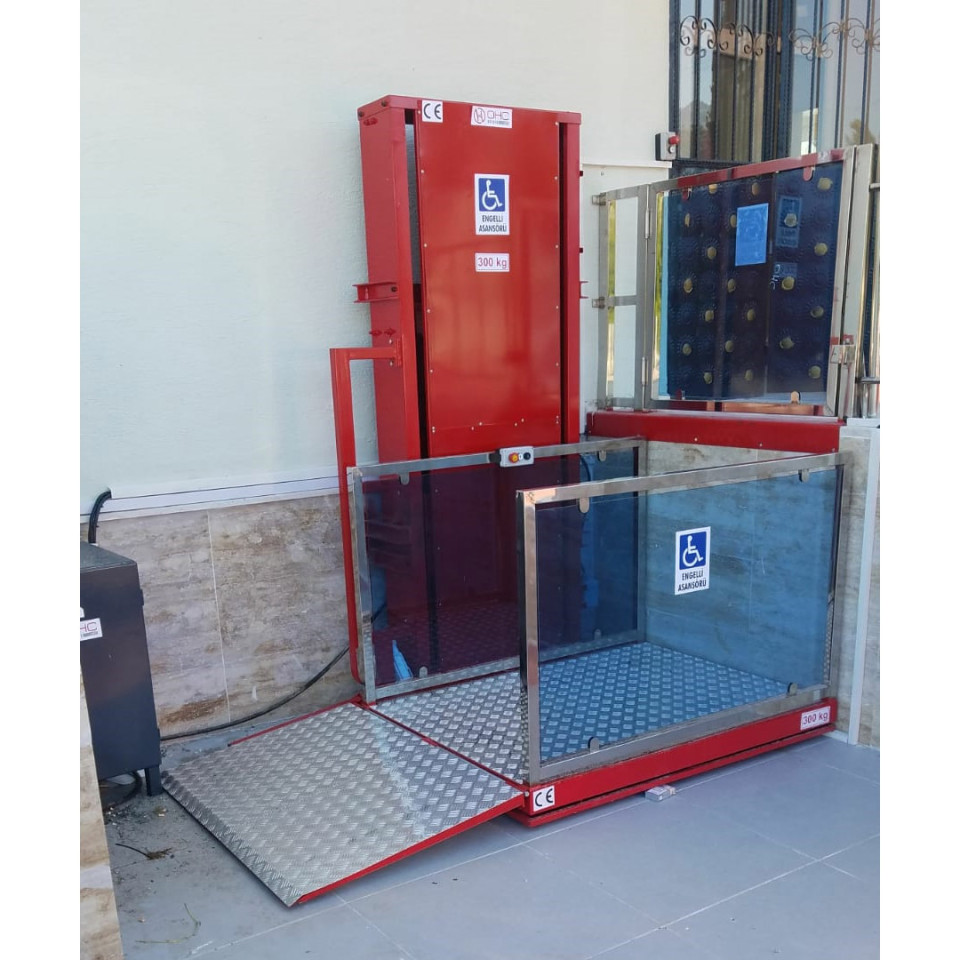
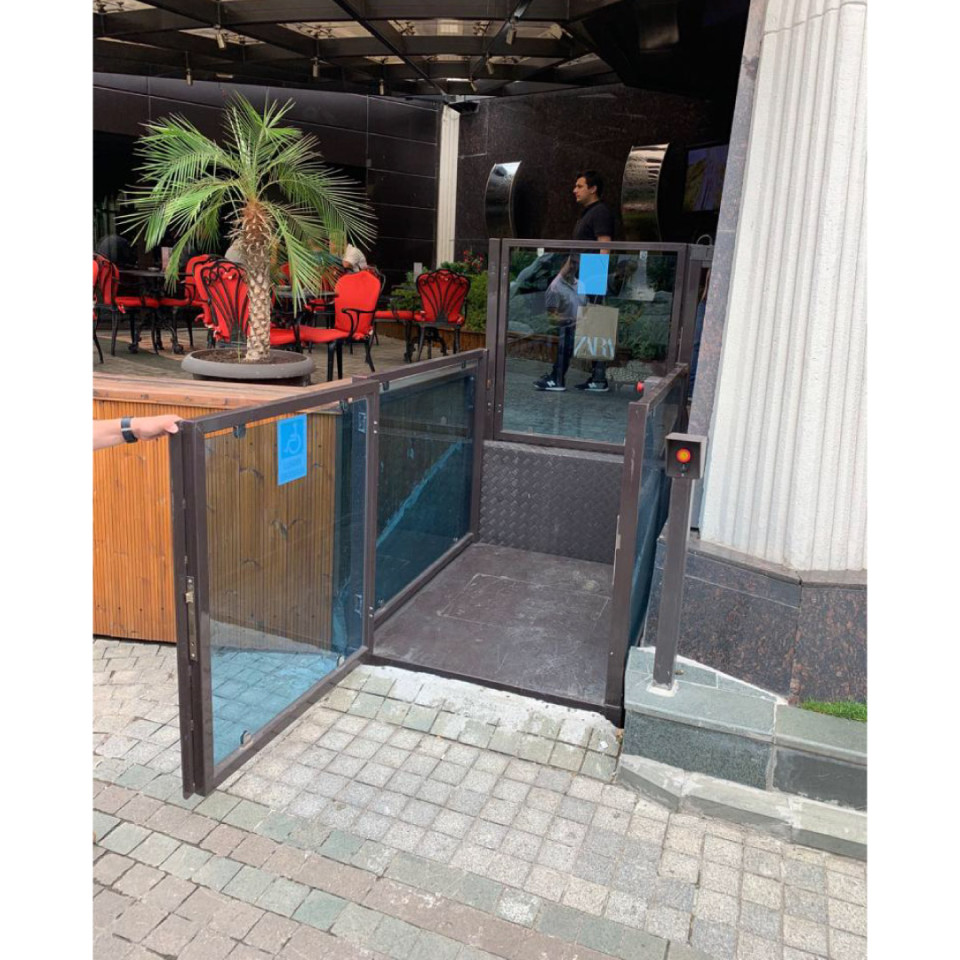
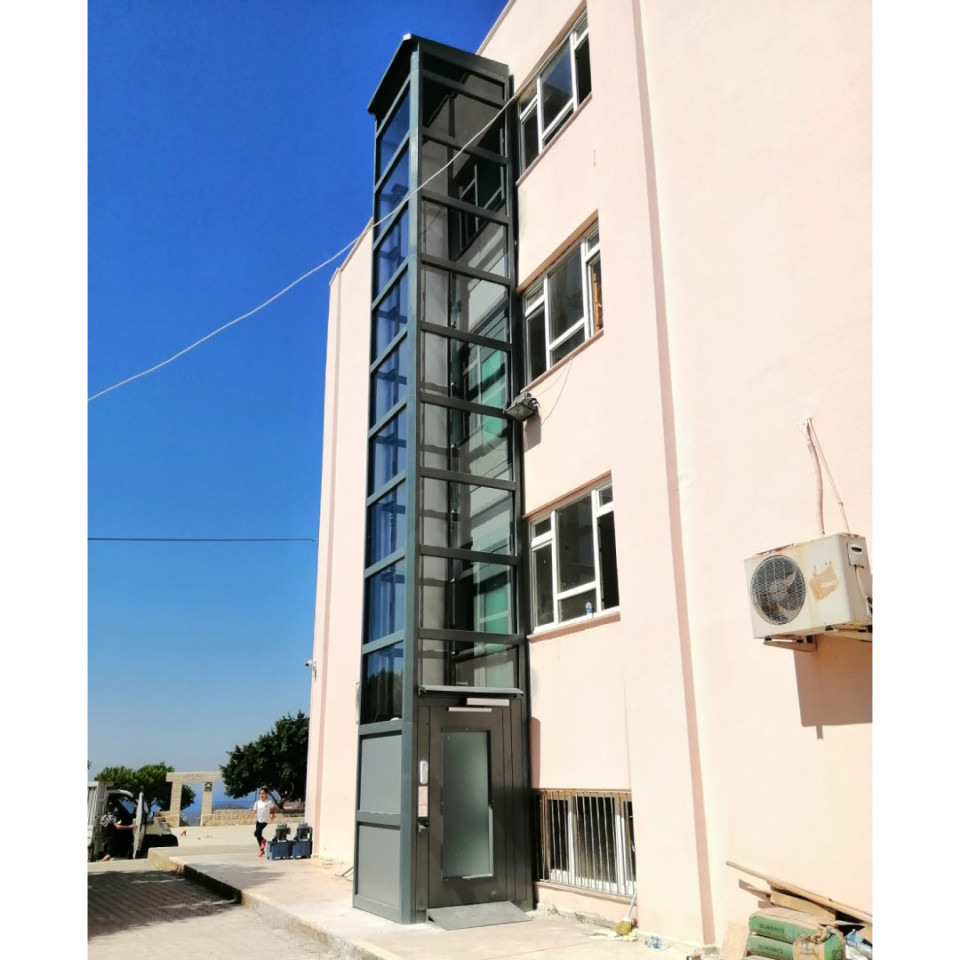
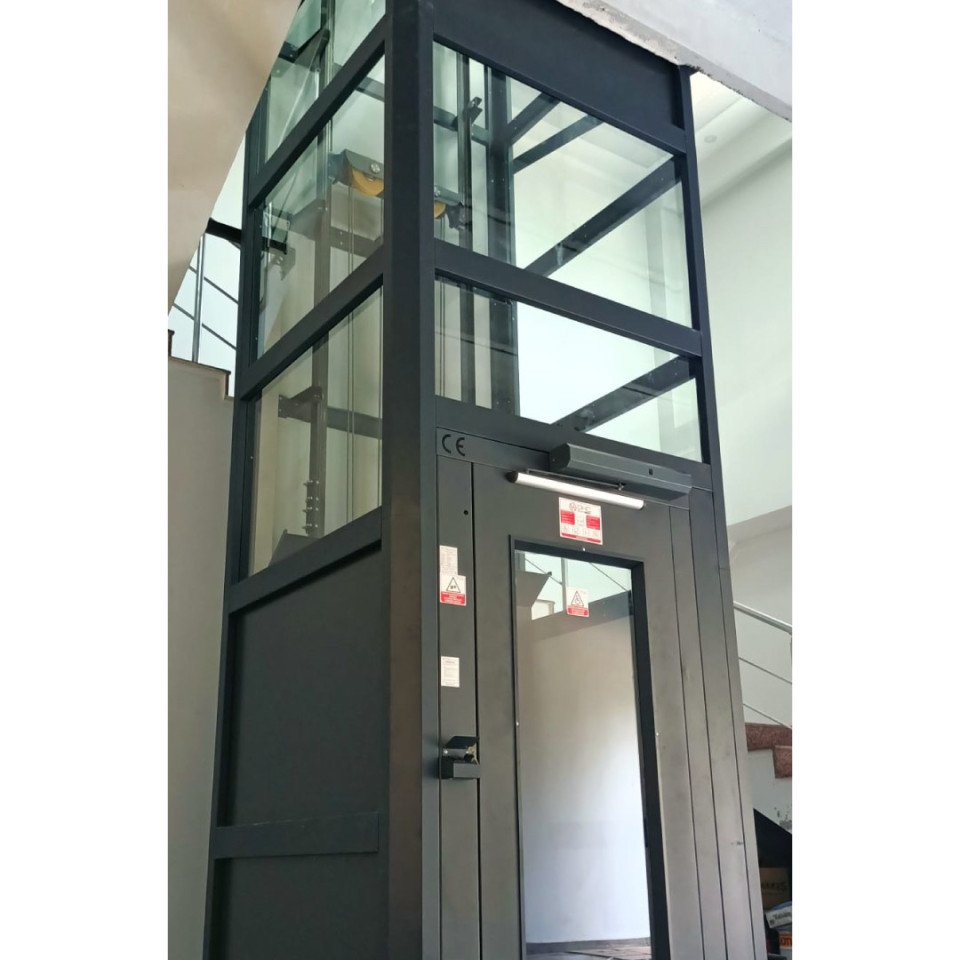
Three principal configurations are available: scissor-type platforms for short travel distances, column-type platforms for greater vertical travel and enclosed platforms where additional protection is required. The appropriate solution is selected according to travel height, platform dimensions, available installation area, indoor or outdoor use and the needs of the building.
Safety and Standard Features
- CE-compliant design and manufacture for the applicable configuration.
- High-strength steel supporting structure.
- Options for pit installation or direct floor mounting.
- Push-button, call-station or compatible remote-control operation.
- Pressure relief valve for hydraulic overload protection.
- Hose-burst valve to help prevent sudden platform descent.
- Flow-control valve for regulated lowering speed.
- Low-maintenance bushes and sealed bearing rollers at moving points.
- Compact, quality hydraulic power unit.
- Emergency stop and manual lowering provisions according to the project.
Project Planning and Installation
A safe and convenient installation begins with accurate site information. The vertical travel, platform entrance direction, clear opening, floor levels, supporting structure, available power and outdoor exposure should be assessed before production. Access routes and controls must be positioned so that users can approach and operate the platform comfortably.
OHC Lift evaluates the application and prepares a project-specific platform configuration. Final dimensions, rated capacity, gate arrangement and protective components are confirmed during engineering. Correct installation, user instruction, periodic inspection and preventive maintenance are essential for dependable long-term operation.
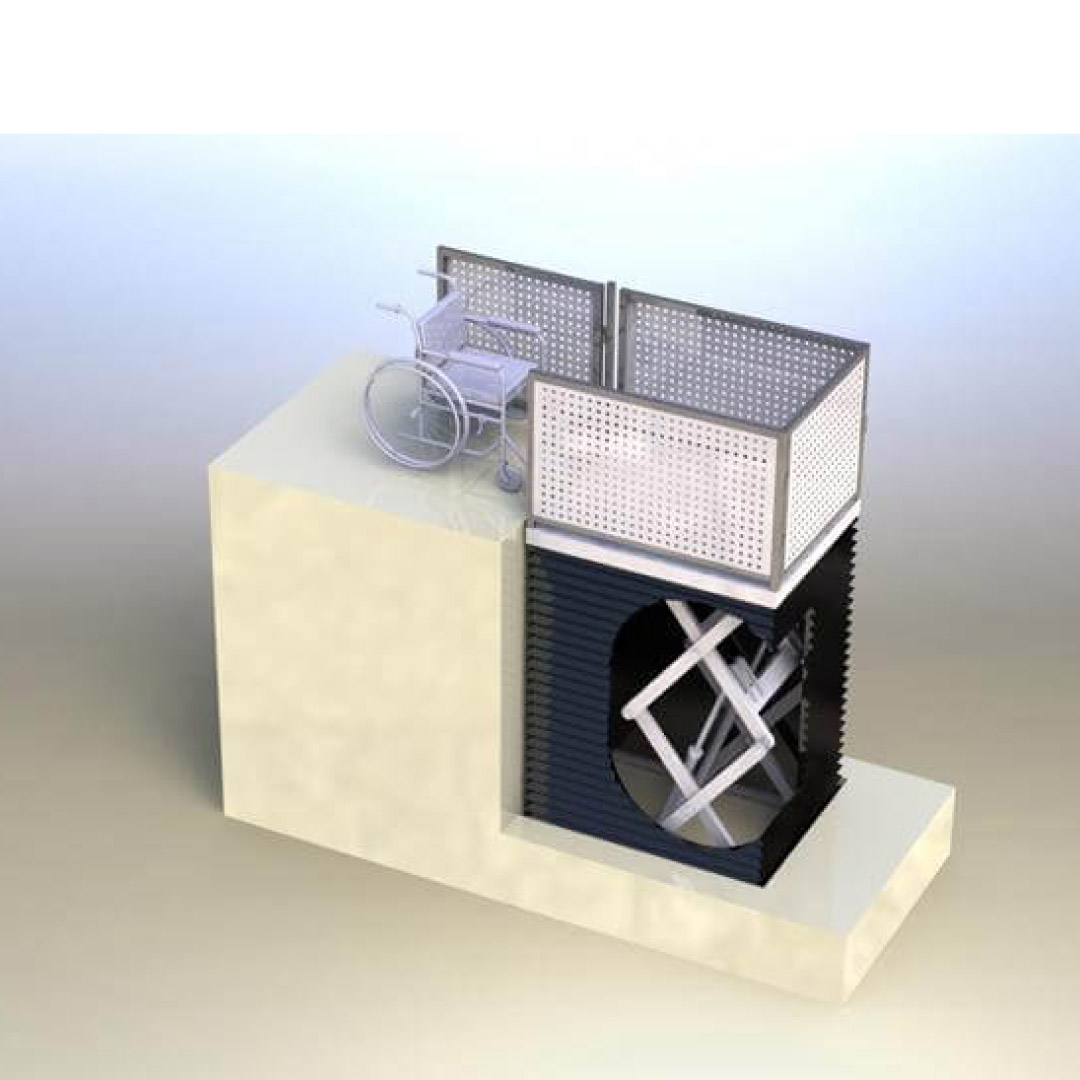
Scissor Type Disabled Lift
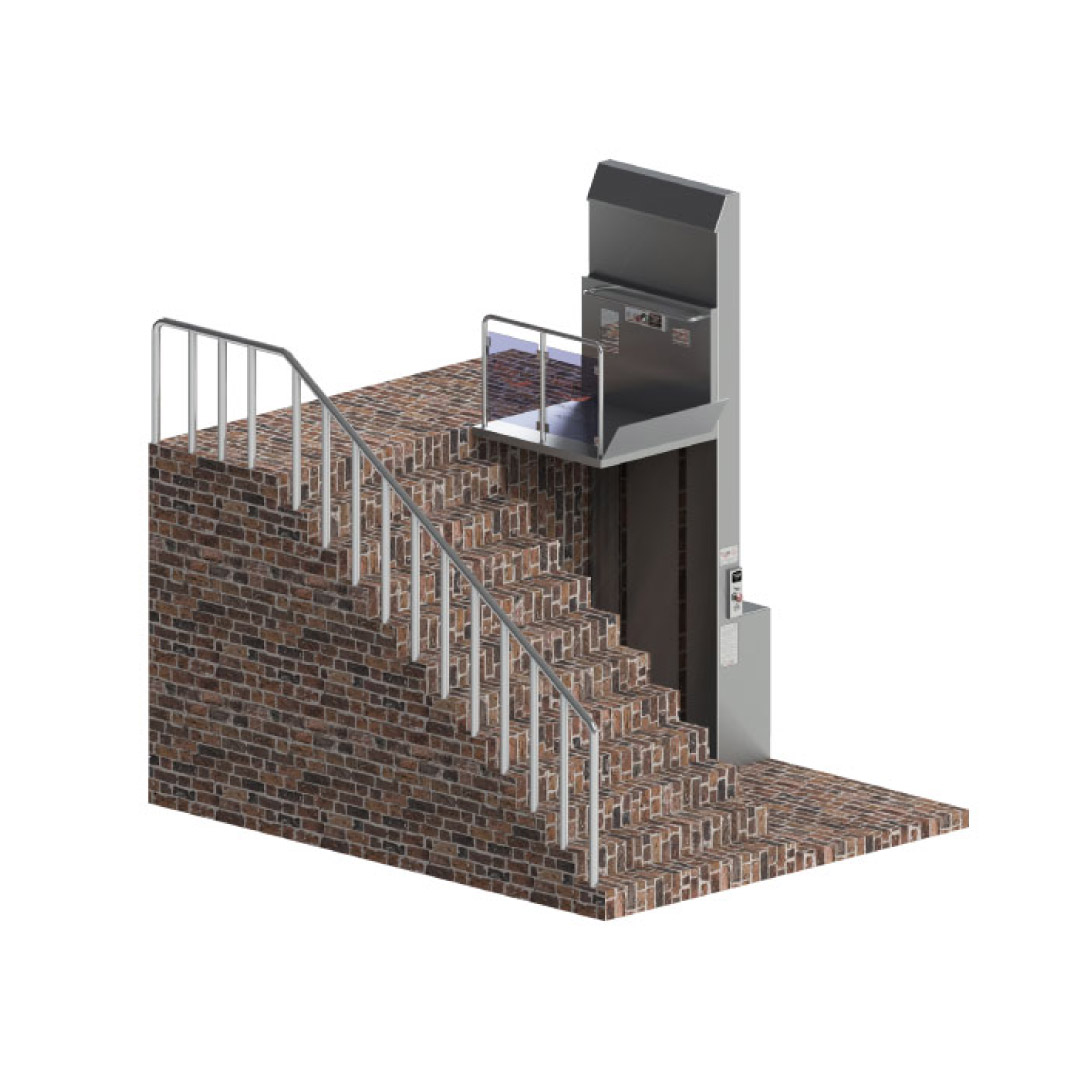 Open Type Disabled Lift
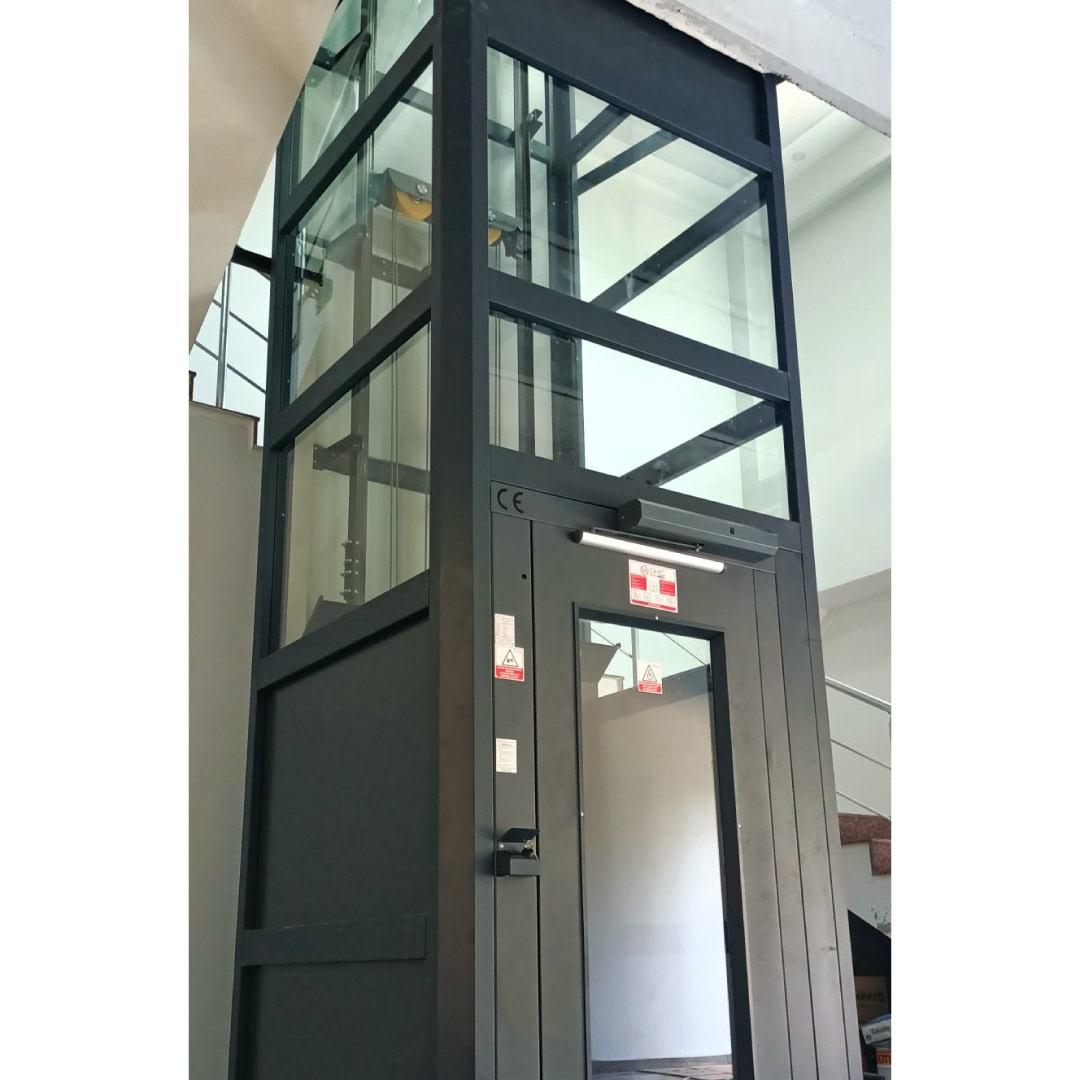 Closed Type Disabled Lift
Disabled elevators are important tools designed to facilitate the daily lives of disabled people. These elevators help people with disabilities access buildings, public spaces, homes and other places comfortably and safely. Disabled lifts can have different shapes and sizes, different features and functions. In this article, we will provide detailed information about the types, features and advantages of disabled lifts.
Disabled Lift Types
- Scissor Lift for Disabled People
Scissor lifts are one of the most commonly used types of wheelchair lifts. These lifts use a platform with a pair of scissors to provide vertical movement. Scissor lifts can be designed for outdoor or indoor use and can be up to 3 meters in height. It is also designed for use by people with disabilities and has features such as movable arms, safety guards and buttons.
- Column Disabled Elevator
Column disabled lifts have a two-column frame and platform. These elevators can be designed for an outdoor or indoor use and can be up to approximately 15 meters high. Column disabled elevators are ideal for buildings with high height and are designed for the use of disabled individuals.
- Closed Type Disabled Elevator
Closed type disabled elevators are designed for use in homes or offices of disabled individuals. These elevators have a platform closed by a steel or glass door. Closed type disabled lifts are designed to reach heights of up to 3 meters. It is also designed for use by people with disabilities and has features such as movable arms, safety guards and buttons.
Disabled Elevator Features
Disabled elevators have many features for the safety and comfort of disabled individuals. Some of these features are:
- Easy to Use: Disabled elevators enable disabled people to use the elevator safely with many features that are easy and comfortable to use. Elevators are equipped with simple buttons, movable arms and safety guards.
- Various Sizes: Disabled lifts are available in different sizes and can be used at various heights. This provides different options for people with disabilities to use in their homes, public spaces or offices.
- Safety Features: Disabled elevators are designed for the safety of disabled individuals. Features such as safety guards, safety lock and emergency stop button make the elevator safer to use.
- Easy Maintenance: Disabled lifts do not have a complex structure that requires regular maintenance and repair. It is easy to clean and easy to maintain.
- Disabled Friendly: Disabled elevators are specially designed for the use of disabled individuals. This makes the lives of people with disabilities easier and more comfortable.
Advantages of Disabled Lift
Disabled elevators provide many advantages to facilitate the lives of disabled individuals. Some of these advantages are:
- Ease of Access: Disabled lifts make it easier for people with disabilities to access buildings, public spaces or homes. These lifts are ideal for people who have difficulty using stairs or use a wheelchair.
- Increases Safety: Disabled elevators are designed for the safety of disabled individuals. Features such as safety guards, safety lock and emergency stop button make the elevator safer to use.
- Provides Comfort: Disabled elevators make the life of disabled individuals more comfortable. Elevators offer a wide area that disabled people can easily use with their wheelchairs or other assistive devices.
- Provides Independence: Disabled lifts increase the independence of people with disabilities. These elevators help people with disabilities become more involved in their daily lives and stay socially active.
As a result, disabled elevators are an important tool to facilitate the life of disabled individuals. Disabled lifts are available in different sizes and various types and are designed to meet the needs of all types of disabled people. These elevators provide more independence and freedom of movement for people with disabilities in their daily lives.