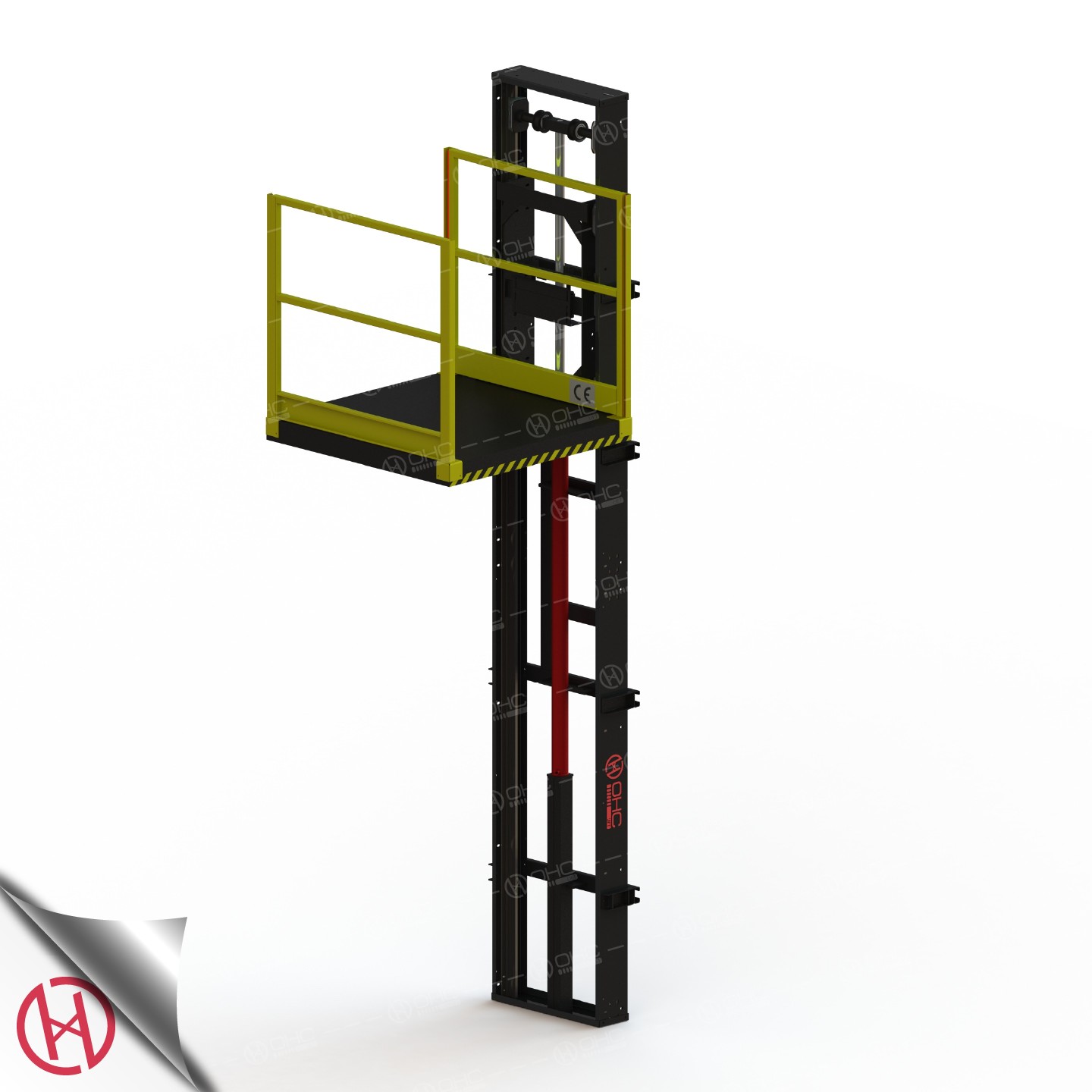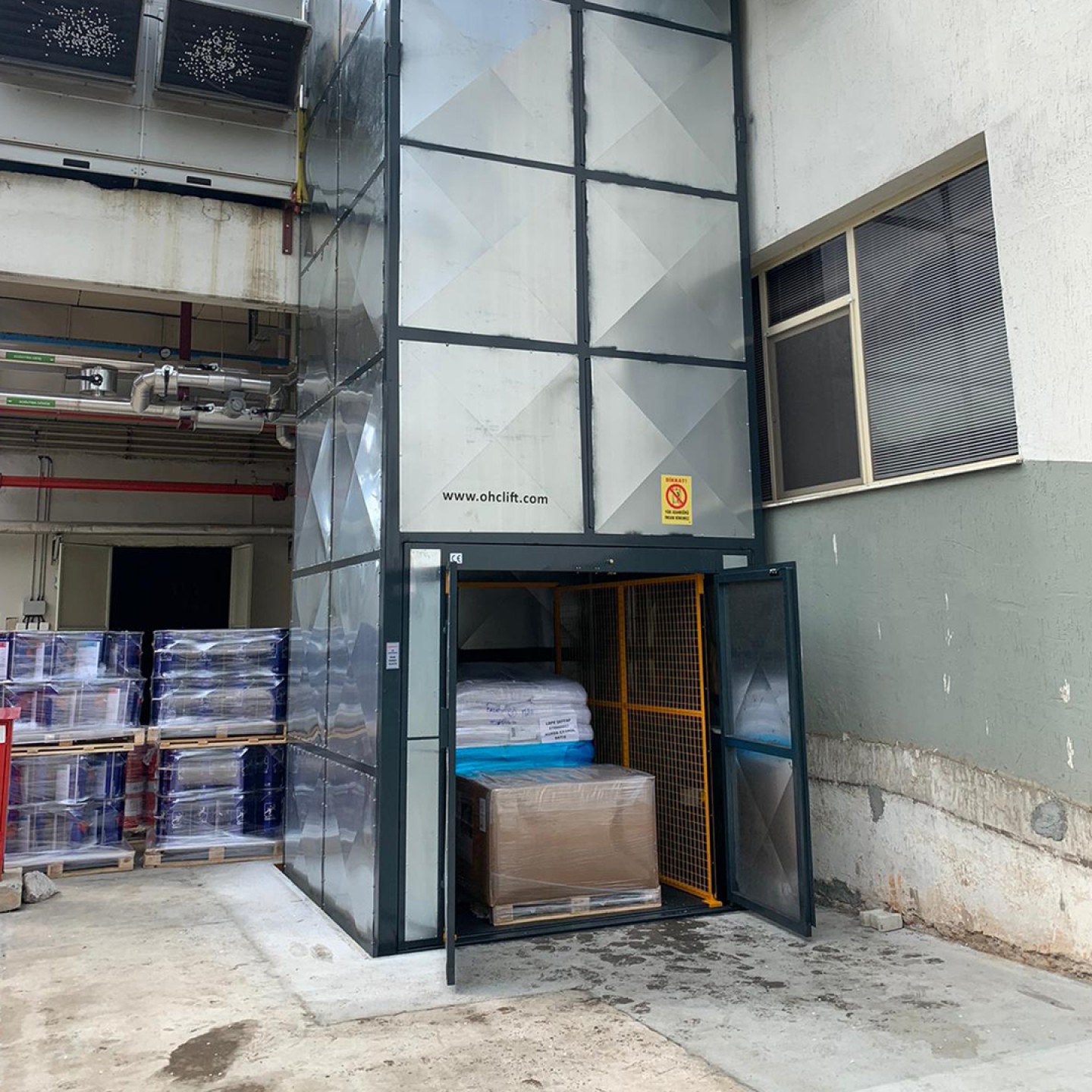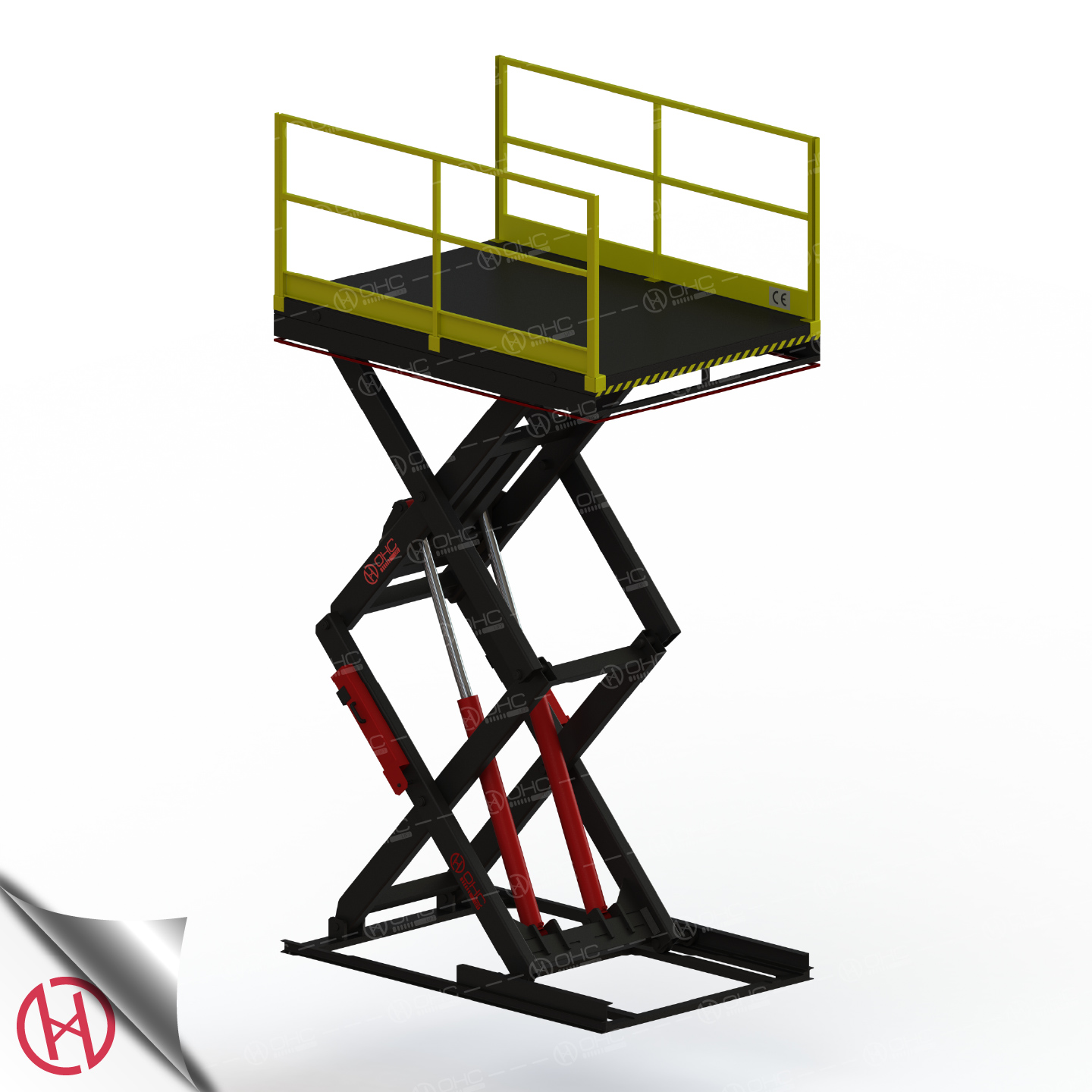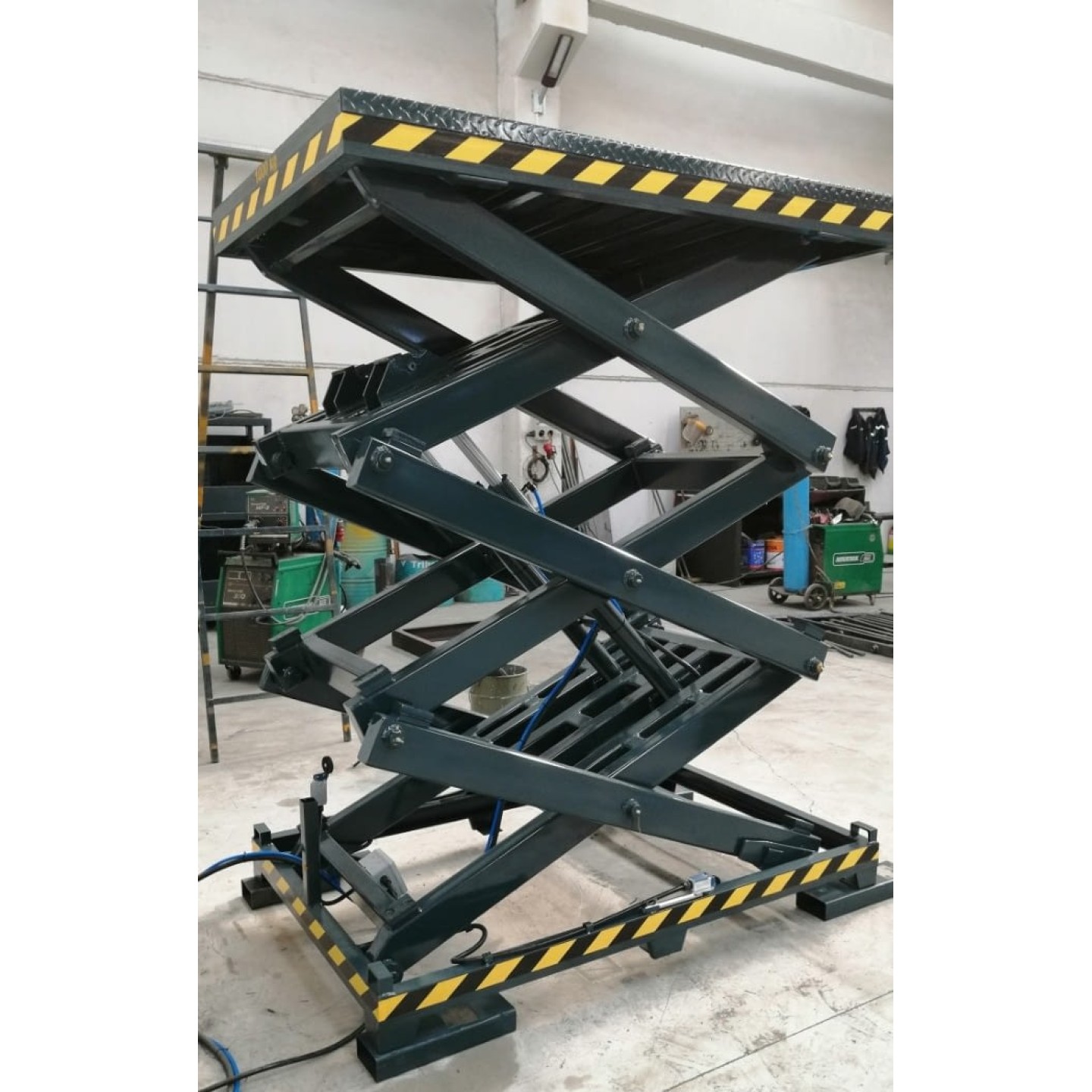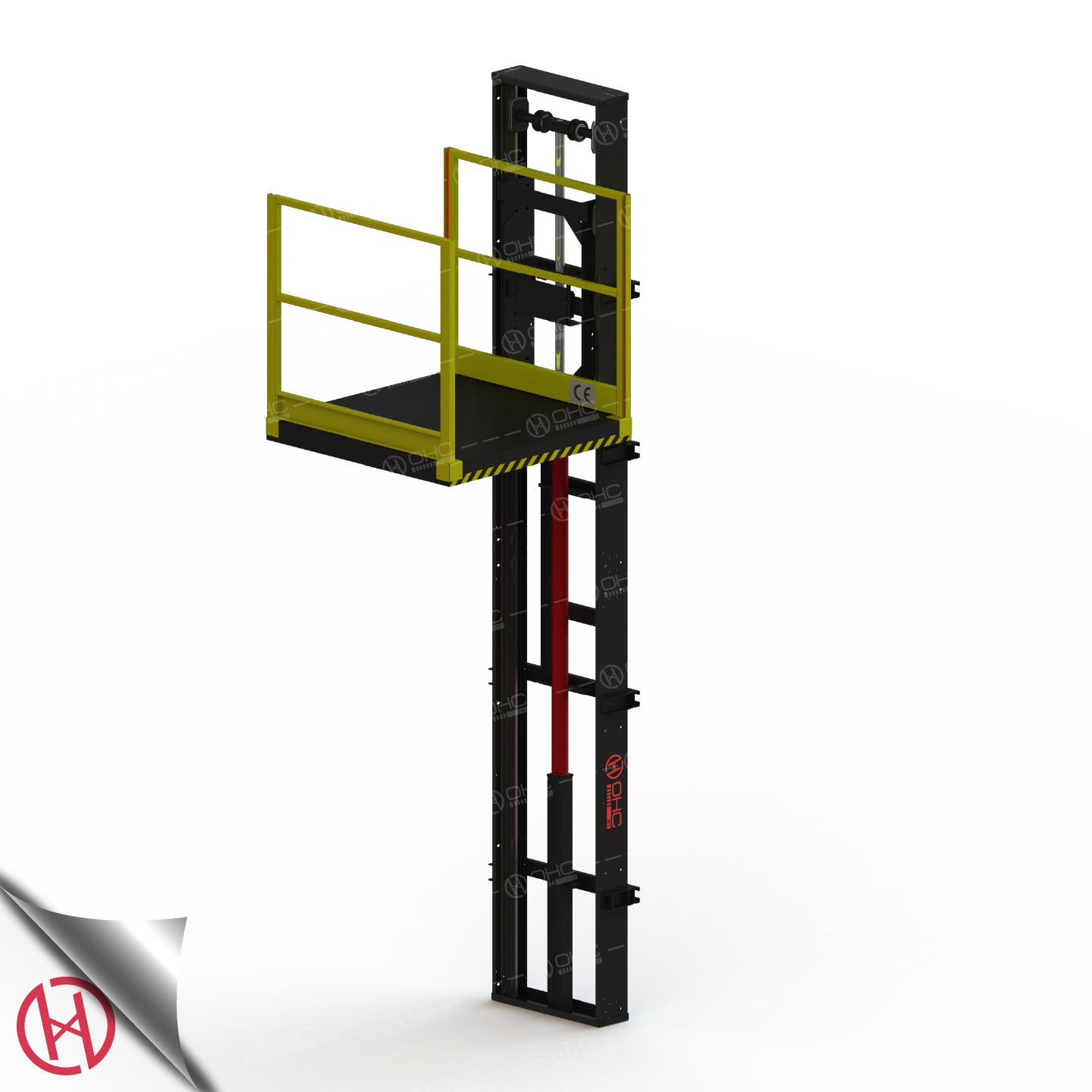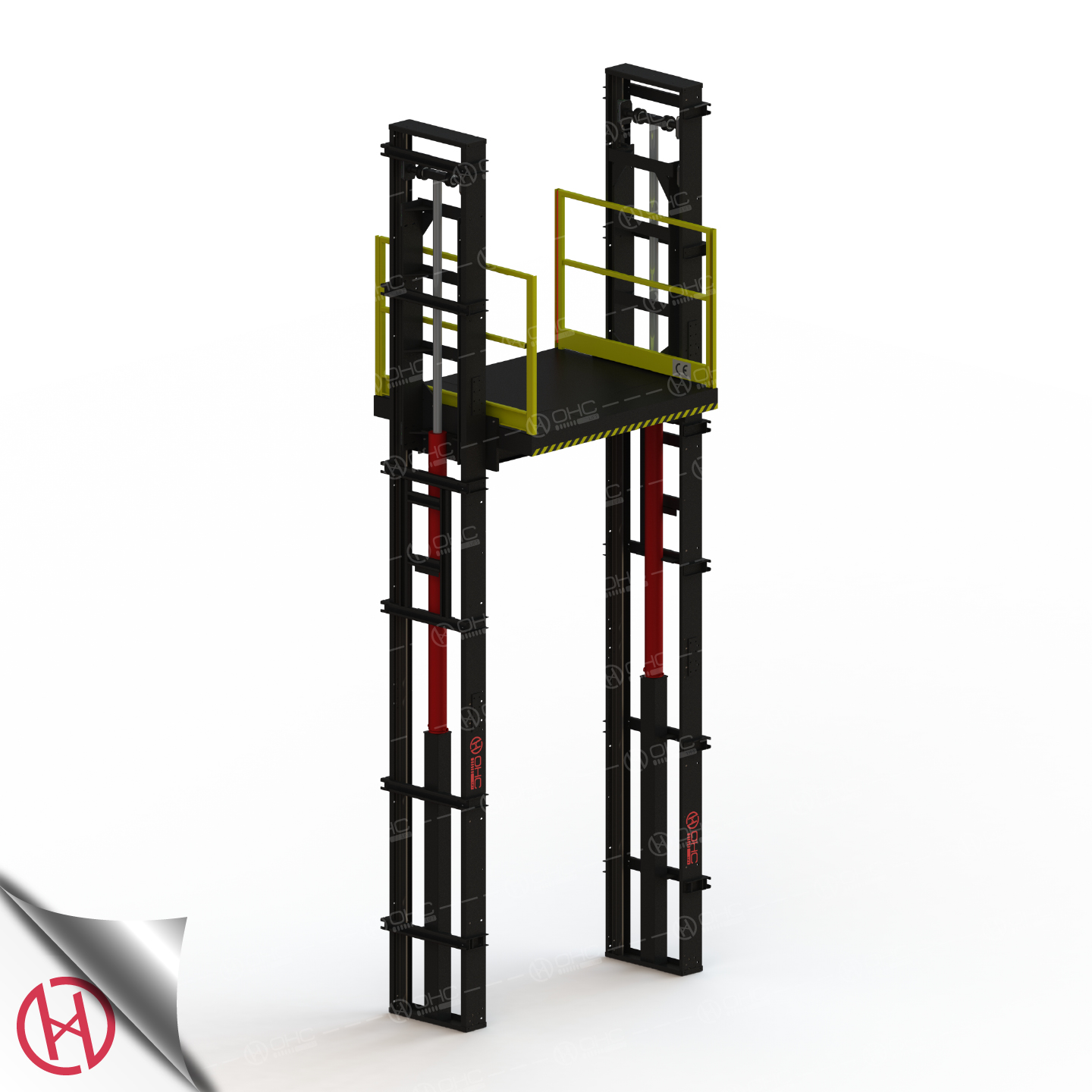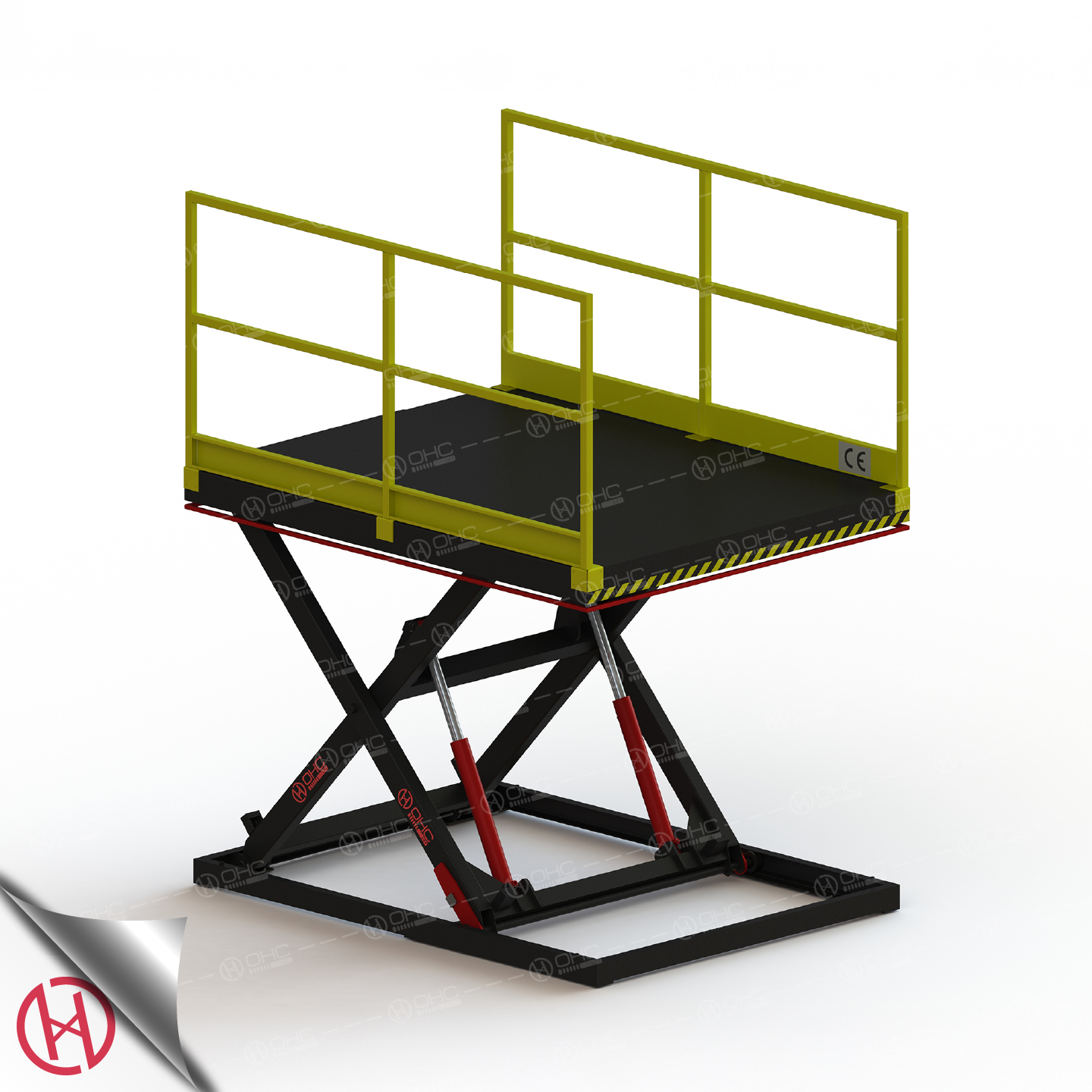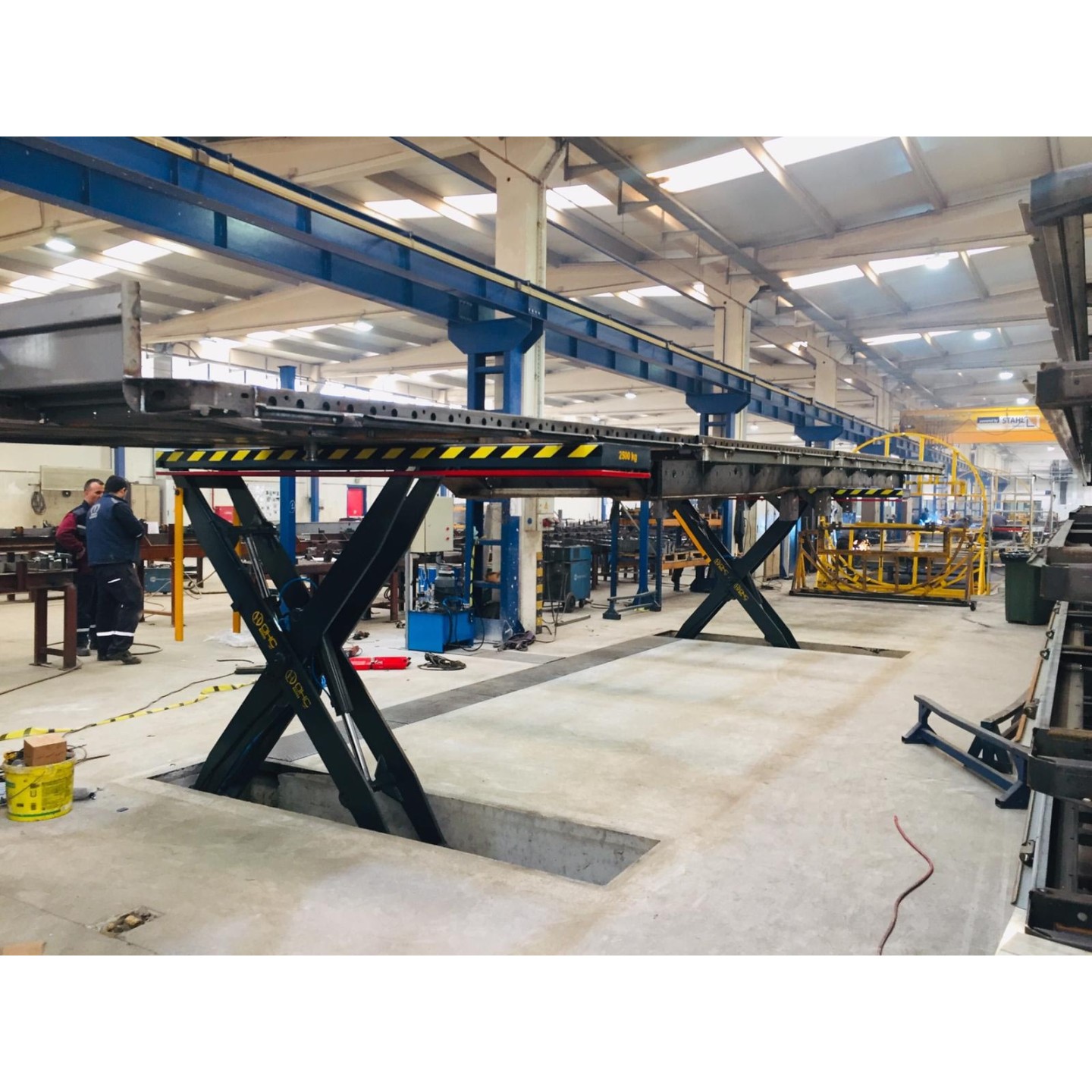
Hydraulic lifting platforms move palletised, bulky or heavy goods safely between levels in factories, warehouses, logistics centres and production facilities. OHC Lift engineers each system around the rated load, travel height, platform size, number of stops, duty cycle and actual site conditions.
Which lifting platform is right for the application?
A scissor lift platform provides a broad, rigid deck for production-line feeding, dock levelling and material transfer between floors. A column lifting platform is often preferable where the footprint is restricted, the travel is longer or the installation is on a building façade. Projects that require an enclosed car or shaft should also be assessed as a goods lift.
Information required for engineering
- Total load, dimensions and load distribution on the deck
- Clear travel, number of stops and available installation space
- Whether loading is performed with a pallet truck or forklift
- Daily operating frequency, indoor/outdoor conditions and power supply
- Pit, gates, guardrails, bellows and control requirements
Capacity selection must account for handling equipment and possible off-centre loading, not only the goods themselves. A site-based assessment therefore produces a safer and more efficient result than selecting a generic model.
What determines the price?
The quotation depends on capacity, lifting height, deck dimensions, scissor or column construction, access protection, finish and installation conditions. OHC Lift defines the necessary equipment clearly so that the project meets its operational requirements without avoidable cost.
Project support from OHC Lift
One team follows the process from requirement analysis and sizing through manufacture, installation and commissioning. Send the installation dimensions, load details and required height to request a technical assessment and project quotation.