Hydraulic lifting systems are powerful and efficient lifting solutions used in many industrial and commercial applications today. These systems are designed to lift, move or support heavy loads using the principles of hydraulic pressure. These systems are important hydraulic applications with many advantages and widespread areas of use.
How Hydraulic Lifting Systems Work
The hydraulic lifting system works based on Pascal's principle. According to this principle, a pressure is transmitted equally to all directions in a closed system. Hydraulic lifting equipment uses a hydraulic fluid (usually oil) to create pressure and this pressure is used to lift or move the load by means of a cylinder or piston. Basically, a hydraulic lifting system consists of the following components:
- Hydraulic Pump:
The hydraulic pump supplies the hydraulic fluid used in the hydraulic system at high pressure. It uses mechanical force to push hydraulic fluid into the cylinder or piston. The hydraulic pump is usually driven by an engine or electric motor. The pump provides the power required for the lifting process by producing the necessary pressure in the hydraulic system.
- Hydraulic Fluid:
In hydraulic systems, a special hydraulic fluid is used to transmit the pressure produced by the hydraulic pump and to store energy. Mineral oils are generally preferred as hydraulic fluid because they are resistant to high pressures and reduce friction. Hydraulic fluid lifts or moves the load by applying pressure inside the cylinder or piston.
- Cylinder or Piston:
Cylinder or hydraulic lift piston is a moving component where hydraulic fluid is pushed to lift or move the load. The load is lifted or transported by introducing hydraulic fluid into the cylinder or applying pressure on the piston. The dimensions of the cylinder or piston determine the lifting capacity.
- Valve and Control Mechanisms:
In hydraulic lifting systems, valves and control mechanisms are used to control the flow of hydraulic fluid. The valve regulates pressure, flow and direction in the hydraulic system. These components can perform operations such as lowering the load, fixing it or holding it in a certain position. Control mechanisms allow the operator to manage the system and control the lifting process.
Usage Areas of Hydraulic Lifting Systems
 Hydraulic lifting systems are widely used in the following fields:
- Construction and Manufacturing Industry:
Hydraulic lifting platformis widely used for lifting heavy loads in the construction and manufacturing industry. These systems are ideal for lifting and transporting high-rise structures, bridges, cranes, machinery equipment and other heavy materials. Hydraulic systems can easily perform high-power and precise lifting operations.
- Automotive Industry:
In the automotive industry, the hydraulic lifting system is used for the maintenance and repair of vehicles. Hydraulic jack systems and parking lift are widely preferred in automotive workshops and service centers to lift vehicles from heights and make their lower parts accessible.
- Mining and Energy Sector:
In the mining and energy sector, hydraulic lifters, heavy duty It plays an important role in lifting, moving and assembling machines. In mines, power plants, oil and gas platforms, hydraulic systems are used as a reliable option for placing, dismantling and moving large-scale equipment.
- Hospital and Healthcare Sector:
It is widely used in patient lifting and transfer operations in the hospital and healthcare sector. Equipment such as beds, patient lifting systems and disabled elevators enable patients to move around safely and comfortably. Hydraulic systems are critical for patient care and patient safety.
Advantages
Hydraulic lifting systems have many advantages:
- High Power Lifting Capacity:
Hydraulic platform systems have the ability to apply high pressure and force. Therefore, they offer high-powered lifting capacity to lift or transport heavy loads. Hydraulic lifting systems can carry more weight than other lifting methods.
- Precise Control Opportunity:
Hydraulic systems are equipped with valves and control mechanisms to provide precise control. In this way, it is possible to lift or lower loads slowly and in a controllable manner. Precision lifting operations provide a great advantage in applications that require significant precision.
- Flexibility and Versatility:
Hydraulic lifting systems have a flexible structure that can be adapted to various applications. Systems are available in different sizes and capacities and have the ability to handle a variety of workloads. Additionally, hydraulic systems have components that can move in different directions and be fixed in different positions. You can contact OHC Lift for detailed information and prices about these systems.
- Durability and Longevity:
They are generally designed to be used in heavy working conditions. These systems are produced from high-strength materials and are resistant to adverse effects such as wear, corrosion or high temperature. When properly maintained and maintained regularly, hydraulic lifting systems offer a long life.
- Automatic or Manual Control Options:
Hydraulic lifting systems can be used with automatic or manual control options. Automatic control requires less operator effort and ensures that lifting operations occur automatically. The manual control option provides the operator with full control and allows the lifting process to be directly directed.
- Safe and Secure Use:
It is designed to provide safe and secure use. These systems are equipped with safety valves and braking systems to prevent loads from falling. Additionally, hydraulic systems can be equipped with overload valves to protect against overload.
Hydraulic Platform Types
- Vehicle platform:
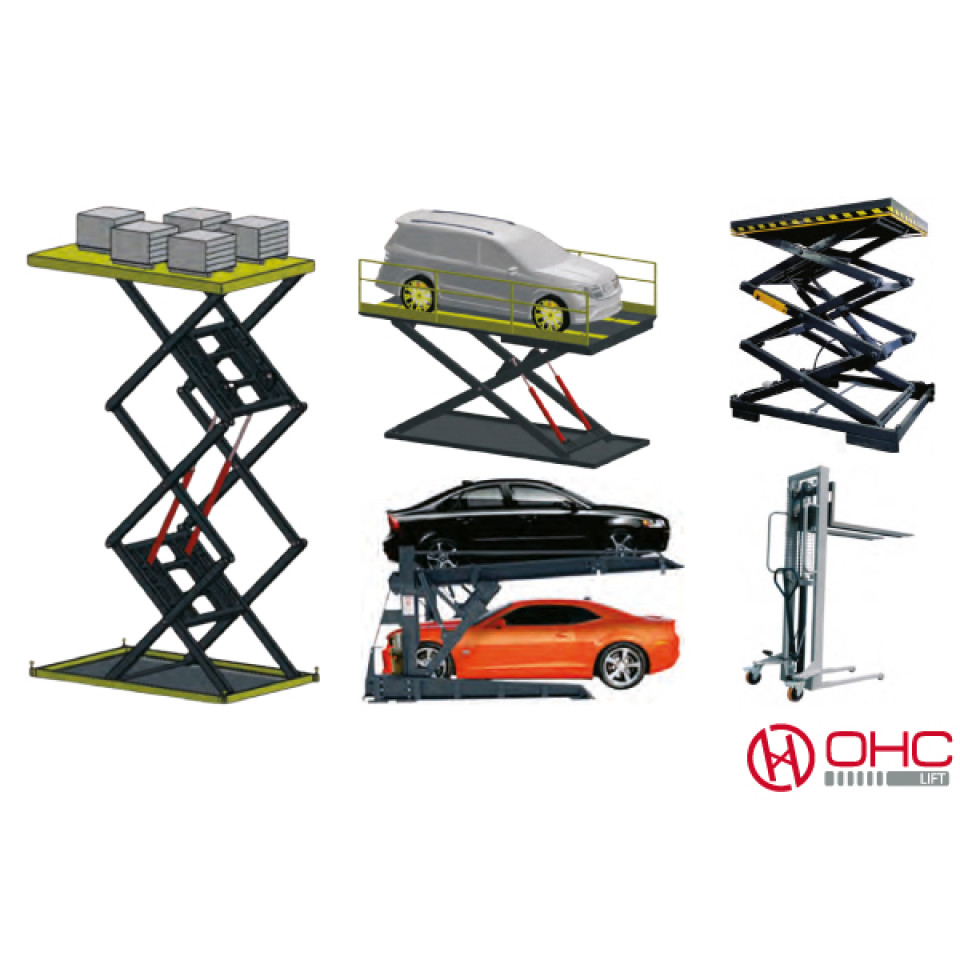
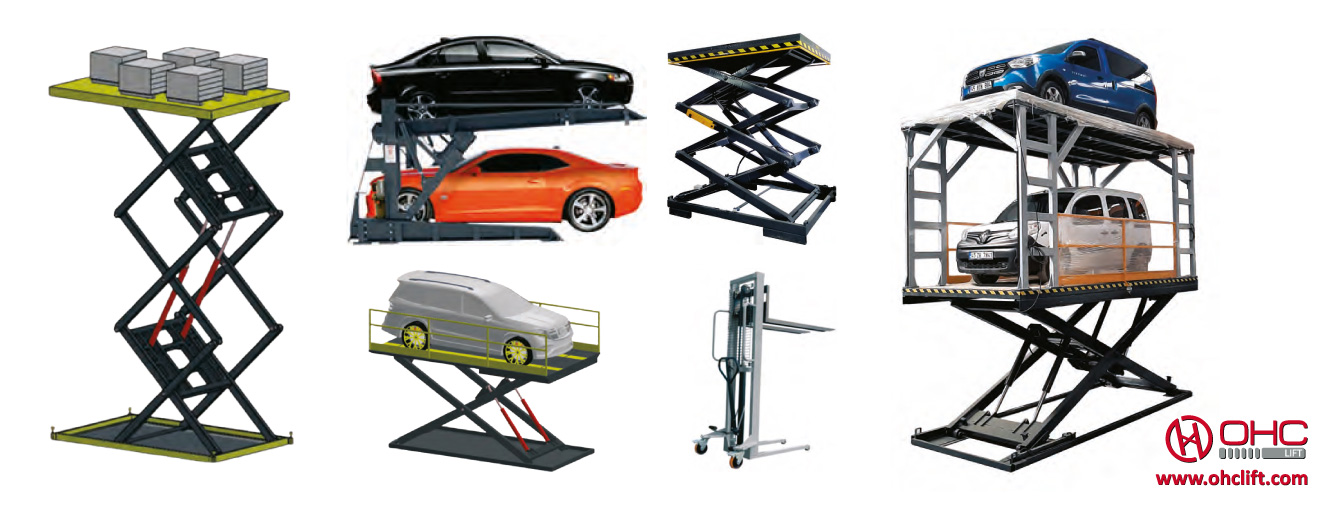
Hydraulic vehicle platforms are special hydraulic lifting systems used to change the height of vehicles from the plane. These systems are used for transportation, loading/unloading or parking of vehicles. The hydraulic lifting mechanism raises the vehicle to the desired height and secures it securely. There are two types of vehicle lift, scissor and column.
- Load platforms:
Freight elevator also called hydraulic load platforms, are special hydraulic lifting systems used to lift and carry loads. These systems, which have scissor and column options, are widely used in the storage, logistics, transportation and distribution sectors. The hydraulic lifting mechanism raises the load and fixes it at a certain point, so height adjustment and transportation operations are easily carried out.
- Hydraulic Forklifts:
Hydraulic forklifts are hydraulic lifting systems used to lift and transport palletized loads. These systems are widely used in the logistics, warehousing and material handling industries. The hydraulic lifting unit lifts the loads up and carries them through the movement of the hydraulic cylinders mounted on the fork.